 Lune Crystal
What sells in a crystal shop?
Published · Last updated
Start with a small range you can display well and reorder easily. Give customers a few choices at the counter, a few pieces to compare on the shelf, and one or two designs worth a closer look. Buy several forms in small quantities so you can see what your customers pick up, ask about, and buy.
For weight-based stones, the minimum is 0.5 kg per stone and form. Beads start at 1 strand per stone and size, carvings at 1 piece per design, and cards at 1 boxed deck per design. There is no minimum order value, so mix forms in whatever amounts suit your shelves.
Tumbled stones
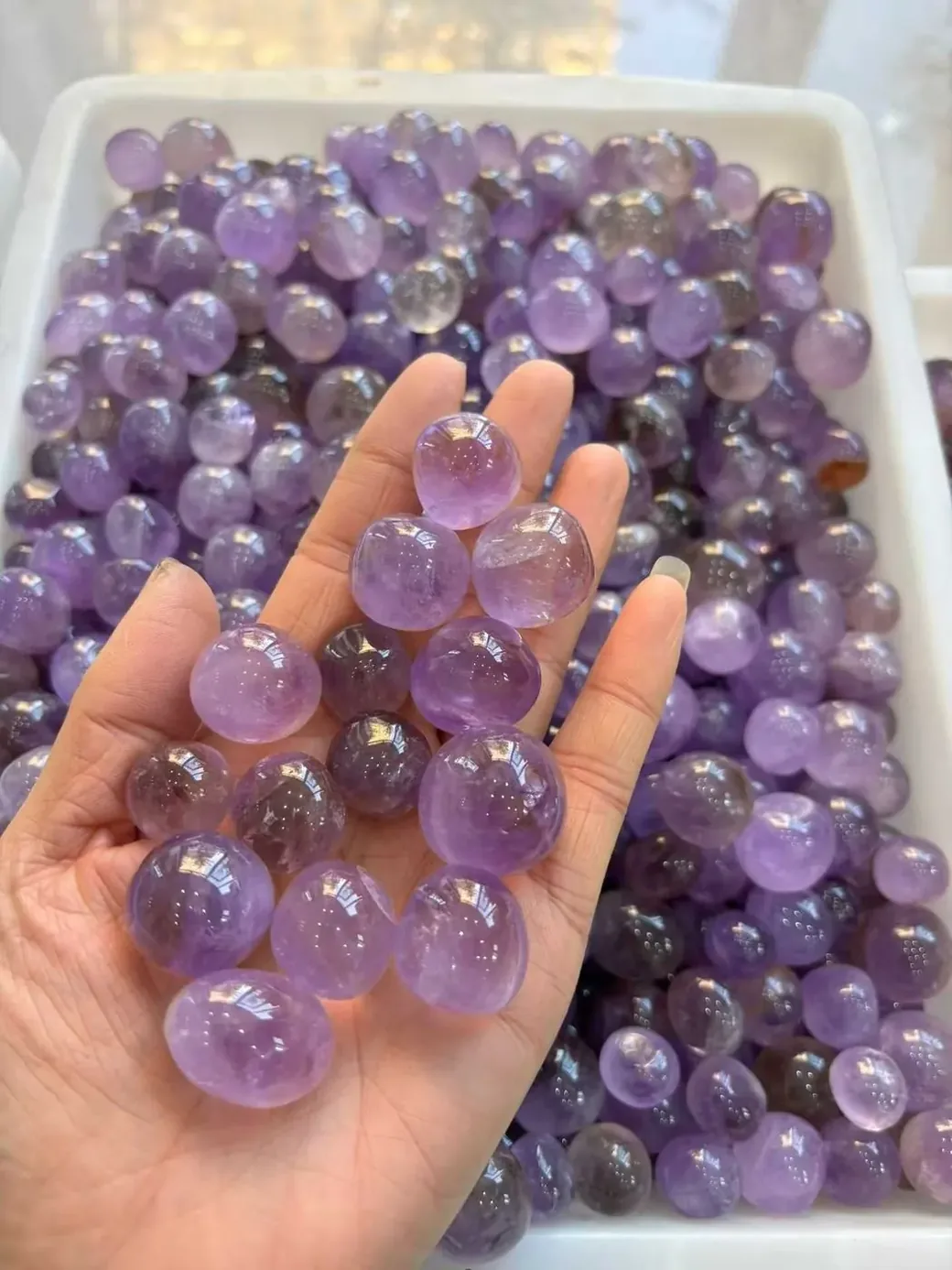
Smooth stones fit a counter tray. Customers can pick a color, compare a few pieces in their hands, and choose one to take home. Try 0.5 kg each of two or three stones with clear color differences. Amethyst tumbled stones and clear quartz tumbled stones make a simple pair to start with.
Most of our tumbled stones are 20–30 mm. Pick one size range so you can label each tray and price pieces consistently. Check the polish and ask to see enough of the lot to judge the spread of colors and sizes. If you sell by the piece, ask for an approximate piece count at your chosen size.
From the market: We measure pieces from your actual lot before you pay. Sizes like 20–30 mm are a range, not an exact size, so expect some spread within it.
Crystal chips
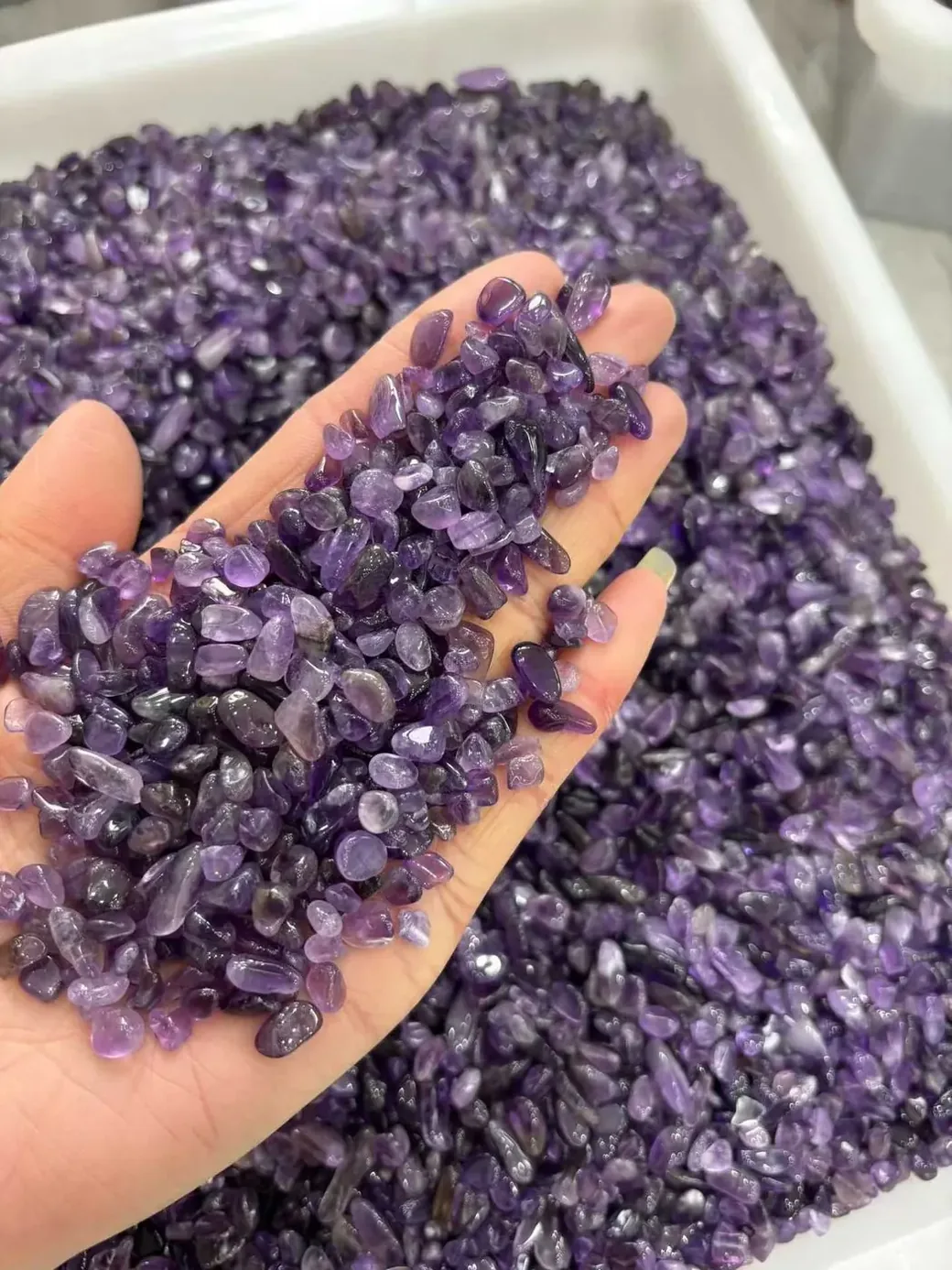
Chips give jewelry and craft customers something they can use in a project. Clear labels help them find the same stone and size again. Start with 0.5 kg per stone in one size range for each stone. Put out a small sample and keep the rest for refills.
For amethyst chips, choose 3–5 mm, 5–7 mm, 7–9 mm, or 9–12 mm. Smaller chips can suit small inlays. Larger chips are easier to see in a display jar. Ask for a close-up beside a ruler. Look for dust, sharp fragments, and pieces outside the range. Keep each stone and size in a separate bin so reorders are easy to track.
Crystal spheres
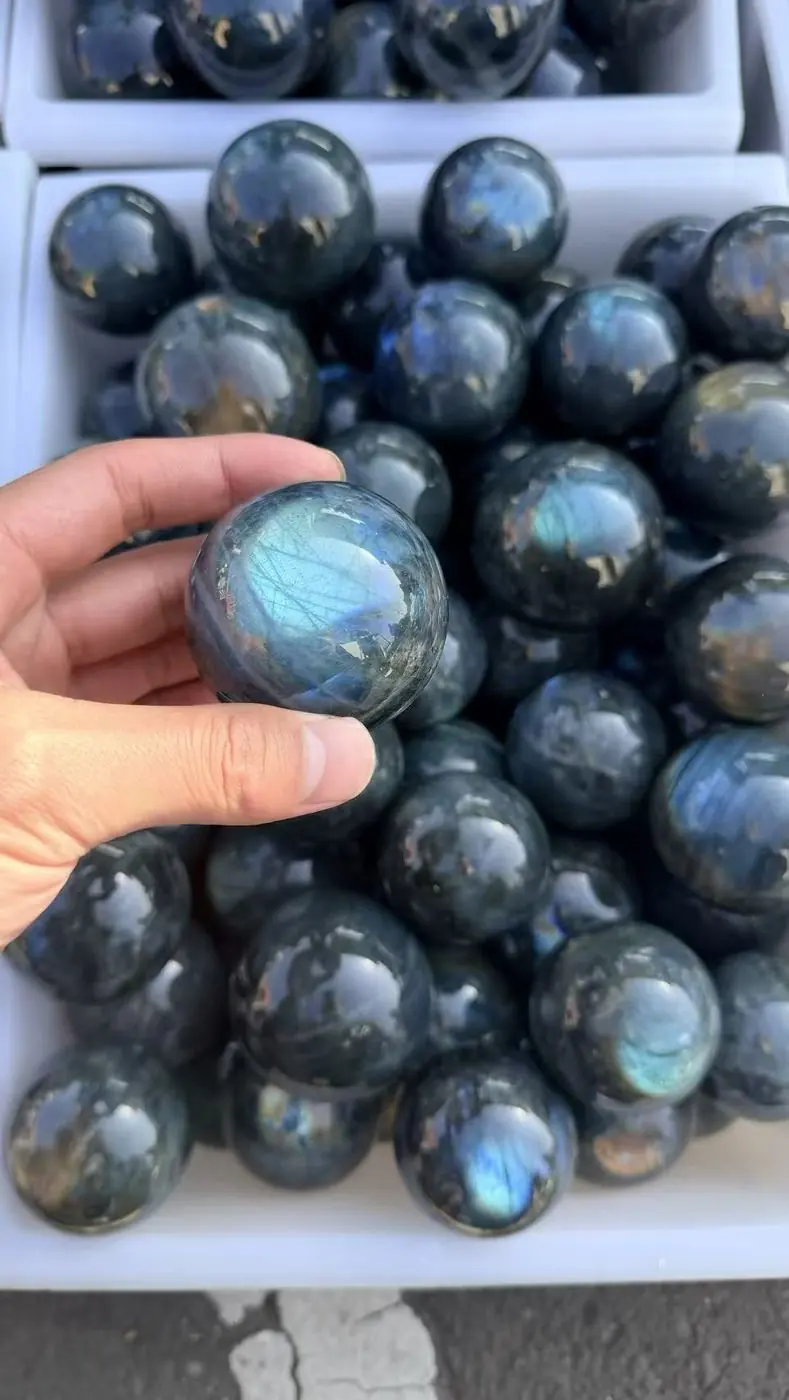
Spheres give people something to turn in the light. A display stand makes their size and finish easy to compare. Start with 0.5 kg of one stone and one diameter range. Try labradorite spheres if your shelf lighting shows the flash.
Most of our spheres are 50–80 mm across. Match the diameter to the stands you already have. Check the polish and surface marks from several angles. Ask how many spheres the lot contains, especially if you plan to sell them by the piece.
From the market: Labradorite can flash blue, purple, or yellow. Tell us which color you want, and we’ll pick for it. We photograph spheres in natural light.
Crystal towers
Towers give a display height without taking much shelf space. Rose quartz towers are one option to test. Start with 0.5 kg of one stone in a height range that fits your shelf. Add another stone after you see how the first lot sells.
Most of our towers are 50–80 mm tall. Ask for the base width if the display is narrow. Look at the tips for chips and check the polish along the edges. Ask for a base photo and a side view so you can see which pieces sit flat and stand straight.
Crystal beads
Strands give makers a choice of stone and diameter. A labeled board helps them compare sizes. Start with 1 strand per stone and size across a few combinations you can display side by side. Keep the labels on the strands so a customer can reorder the same combination.
Choose 6, 8, 10, or 12 mm. Check the lot photos for roundness and color consistency. Confirm the hole size fits your customers’ wire or cord, and ask how many beads are on the strand if buyers need them for a set pattern.
Crystal carvings
Small figures give gift buyers a clear design to choose. Test 1 piece per design, perhaps a rabbit and a Dragon. Position them where buyers can see the detail and the size.
Our carvings are machine-carved and dimensions vary by design. Ask for the height, width, and a photo with a scale. Check small features, edges, and the base. If the stone has a pattern, look at how it falls across the design on the actual piece.
Raw crystals, clusters, geodes, and specimens
A piece with a strong display face gives buyers a reason to stop and look. Try a small cluster before taking on a display-size geode. Start at 0.5 kg per stone and form for lots sold by weight, or 1 piece for a mineral specimen quoted by the piece.
Choose by measured height, width, and weight. Make sure the piece stands safely and that the display face looks good from the front. Ask for photos of the front, base, and any marked areas. Large pieces can take up more room and add weight to your shipment, so check the final shipping quote before you pay.
From the market: Clusters and geodes come without a stand. If you need one, ask us and we can arrange a custom base.
Tarot and oracle decks
A deck can sit beside small gifts and give shoppers another item to browse. Start with 1 boxed deck per design in two editions that fit your shop. A small range makes it easier to see which one customers ask about.
Compare the edition, card language, box dimensions, and whether a guidebook is included. Check the product photos and confirm what comes in the box before ordering. Leave room to display the box front and keep the title visible on the shelf label.
Make the first order easy to repeat
Write each stone, form, size, and quantity on its own line. Start with one counter tray, one shelf display, and a few pieces to test. Check the actual stone photos and the quote before you pay. The final invoice shows goods and shipping together.
If you need stock by a certain date, allow for transit after dispatch. Tracked express usually takes 6–10 working days to the UK, 7–12 to the US and 8–12 to Canada or Australia. Customs checks and peak seasons can add time. See delivery times by destination.
After you approve the photos and quote, Lune Dashiell Inc sends the invoice. You can pay the Stripe invoice by card or with Apple Pay where available. You can also pay by bank transfer to our US company account or by PayPal invoice. See payment options.
After the first few weeks, record which pieces sold and which missing sizes people asked for. Save the lot photo and size range next to your stock notes. Use those details when you reorder.
From the market: We keep photos and notes from every order. When you reorder, we use them to find a close match. Stones vary from lot to lot, so expect a similar lot, not an identical one.
Send us the stones, forms, sizes, and quantities you want to test. We’ll send photos of your actual stones and a quote, usually within 1 working day. You can check both before you pay.